
Brackish water or seawater RO: what changes
Feed salinity drives pressure, recovery, energy and materials. A short guide for project owners.
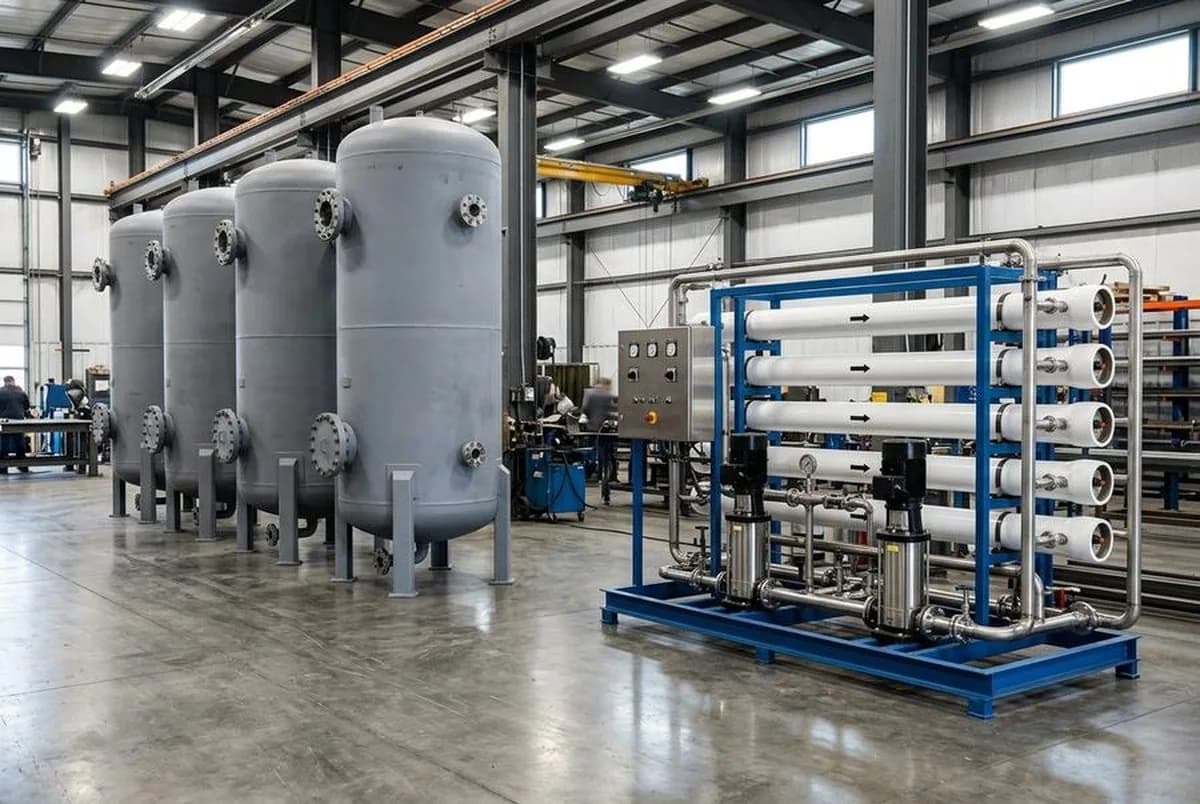
Reverse osmosis works the same way on any salty water: pressure pushes water through a membrane and leaves the salts behind. The saltier the feed, the harder the job, and that changes almost every design choice.
Pressure and energy
Brackish wells typically need a fraction of the pressure that seawater does. Seawater plants therefore use high-pressure pumps and energy recovery devices that return energy from the concentrate stream. Our AQ-S series includes energy recovery for this reason.
Recovery
Brackish plants can usually convert a much larger share of the feed into product water than seawater plants. Lower recovery on seawater means larger intakes and more concentrate to manage.
Pre-treatment and materials
Seawater brings biological fouling and chlorides that attack ordinary steel, so intakes, pre-filtration and high-pressure piping need corrosion-resistant materials. Brackish wells often carry iron, manganese or silica that call for targeted pre-treatment and antiscalant dosing.
What we need from you
A recent feed water analysis, the required product flow and quality, and the site conditions. With these we select the series, membrane array, pre-treatment and materials, and confirm a delivery time of 4 to 12 weeks for standard skids.